Kenny Klein with Stapler

Kenny Klein with Stapler

Wednesday, November 7, 2012

What I've Been Doing...

I feel kind of awful that I haven't posted a blog in a month now. In my defense, I've been busy. I moved to a new apartment a month ago---anyone who has moved knows how stressful that is! But it's a really nice apartment in the Lower Garden District, a very beautiful neighborhood. I am now just a few blocks from Lafayette Cemetery #2, the creepiest cemetery in NOLA, and from LaSalle Park, where the Mardi Gras Indians parade on the weekend closest to Saint Joseph's Day.

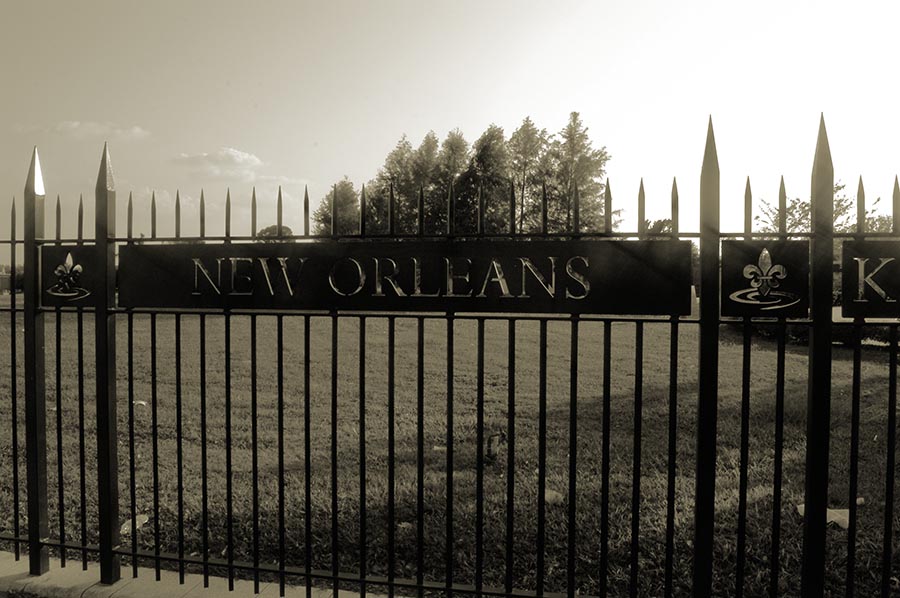
 Two views of Lafayette Cemetery #2.

 I've also been putting together a new band. While I've been using the band name Darwin's Monkey Wrench for concerts while on tour, Darwin's Monkey Wrench has always been an ever-changing ensemble of whichever musicians I can convince to show up. Now the band will have permanent members (or as permanent as musicians can be...) with a focus on my original songs, and on traditional Swing and Jugband music. We've done our very first gig together here in NOLA, and will be playing at the Homegrown Harvest Festival this Friday, and at the Kerry Irish Pub next week. So far, everything sounds pretty good. 

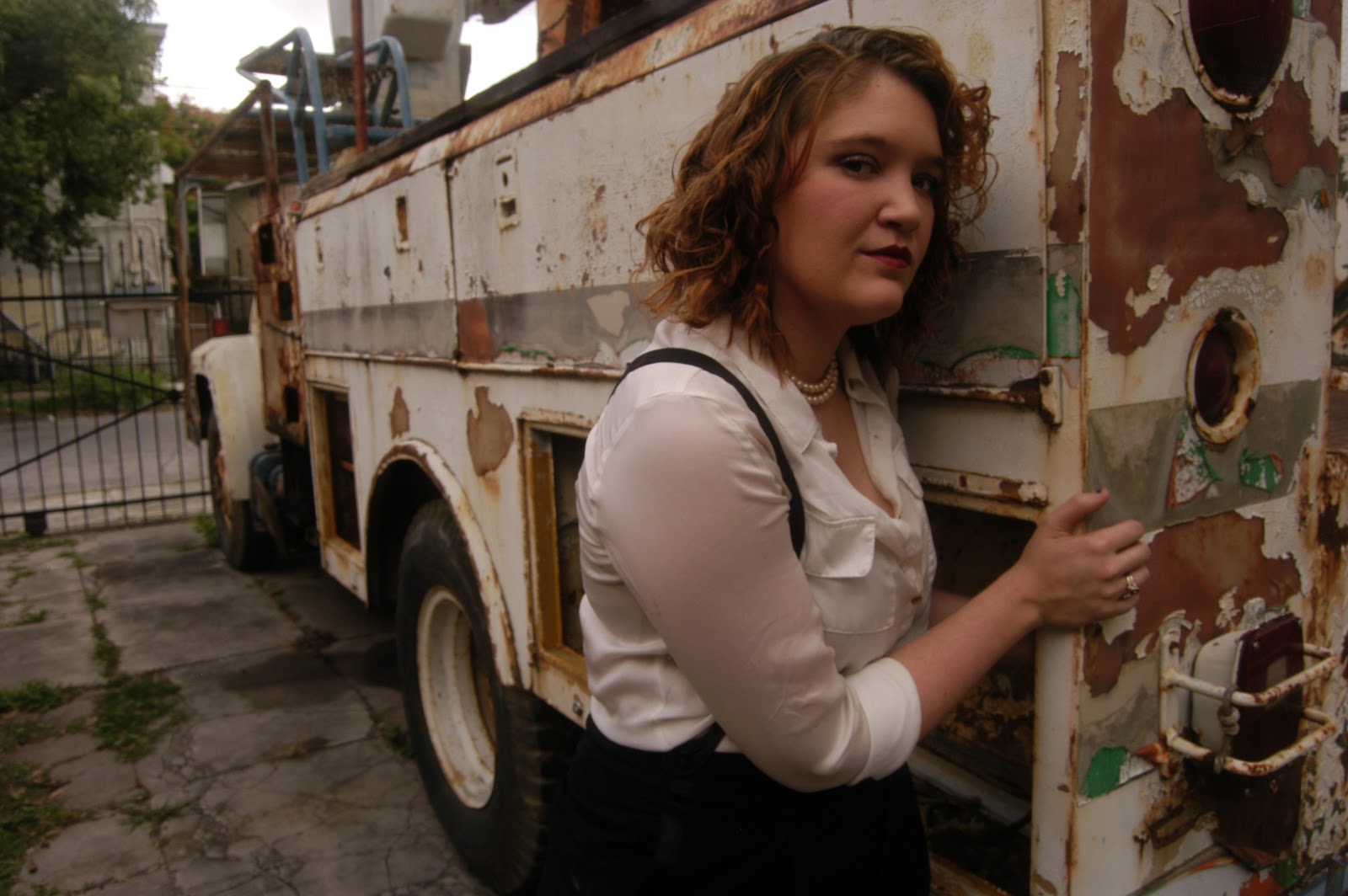
 Darwin's Monkey Wrench, above; singer Carolyn Broussard below. Carolyn is the singer on my Black Cat Blues CD. That truck is in the yard of my new home... no one knows why.


Another new situation is that I have a room here set up as my photo studio, something I did not have in my former apartment. Below are a few photos I've been taking in my new studio, and around NOLA. You can see more on my gallery site. Advisory: there are nudes in my gallery.

 Model Dawn Day in my studio.


 Model Siffa Scary. Siffa speaks to young women about cutting and eating disorders through her video blog; the photo below is part of a shoot illustrating those issues.

 Lauren and Stephanie in the studio (above), part of a fairy tale shoot; and in Day Of The Dead make-up at Gryphon's Nest (below).

I'm back in the swing of writing, and I will have new posts up in a timely manner. See you soon!

Monday, September 24, 2012

The New Orleans Katrina Memorial


Hurricane Katrina is still present in every aspect of New Orleans life. It is as much a part of our culture and community here as is our speech, our streetcars, our bars and our music. It is as defining an event as the Civil War, Emancipation or Brown Vs. Board of Education: more so, as everyone here experienced it in their own lifetimes. If you want to strike up a conversation with anyone in New Orleans, you simply start by asking “were you here for Katrina?”

Often I don't even say the hurricane's name. It has too much emotional impact. I say “the storm.” My friends down here who bear that name have come to spell it with a C, Catrina; one friend goes by Karina. Some just go by Kat.

Back in May, just days before I left New Orleans to go on tour, Lauren and I were at a favorite cafe/headshop/herbal/botanica on Canal Street. The cafe portion borders Saint Patrick Cemetery, and as we had some time to kill, we decided to walk through the cemetery, which occupies sites on either side of Canal Street. When we crossed Canal, we found something new to either of us: the New Orleans Katrina Memorial, a tiny area wedged along the side of Saint Patrick. Armed with only my phone's camera, I took a few shots, unworthy of posting, and swore to come back after my tour to do a proper blog post on this very creepy, very beautiful shrine. 


Like many things Katrina, the shrine itself was built around emotional outpouring and heated controversy: though by 2008 the mayor's office had allotted a million dollars for the shrine to be built, and $200,000 more had come from private donations, as the third anniversary of the storm approached there was still no memorial, and 85 unidentified bodies were still unburied. But weeks before the 2008 anniversary of Hurricane Katrina, heaven and earth were moved, permits were pulled, and the memorial was built. On the third anniversary of Katrina, August 29, 2008, a jazz funeral second line marched along Canal Street; amidst weeping and a few sighs of resolution, the final seven unidentified victims of Katrina were carried to the memorial and interred. It was not until the following year that work was completed, and a marker stone laid.


The Katrina Memorial sits on a plot once used to bury the poor and indigent of Charity Hospital, and the gates of the memorial still carry Charity's name above them; along the edge of the gate is the current name, New Orleans Katrina Memorial. As one enters, a small reminder of Charity sits off to the side: a stone commemorating those who donated their bodies to scientific research upon their death. 


The memorial is built in a huge spiral, the shape of the hurricane itself as seen from the air. 

The spiral of the memorial, and neighboring Saint Patrick Cemetery #2, can be seen in the reflective surface of two of the crypts that house the unidentified Katrina dead. 


 At the center of the spiral, the hurricane's eye, sits a carved stone marker, which reads:

On August 29, 2005, Hurricane Katrina made landfall upon the Louisiana and Mississippi Gulf coast, bringing devastation to many communities. In New Orleans, storm surge and the failure of the levee system caused flooding in over eighty percent of the city, trapping thousands. In the chaotic aftermath New Orleanians faced desperate circumstances in homes, hospitals, the Superdome and other makeshift shelters. Despite the heroic efforts of first responders, medical personnel, volunteers and the military, over 1,100 citizens lost their lives in the disaster.

Most of the deceased were identified and buried by loved ones in private ceremonies throughout the nation. Here lie the remaining. The unclaimed and unidentified victims of the storm from the New Orleans area. Some have been forgotten. Some remain unknown.

This memorial is dedicated to these individuals and to all who suffered or died during Hurricane Katrina. Let the victims here forever remind us of those harrowing days and the long struggle to rebuild our city. Let their final resting place call us to constant preparedness. Let their souls join into an eternal chorus, singing with the full might of the indomitable spirit of New Orleans.

Jeffrey Rouse, MD, Chief Deputy Coroner
August 29, 2009


Around the marker sit stone benches, and beyond these, forming the outer spiral of the storm, are six crypts, the final resting places of the bodies of eighty-five victims of Katrina.  They are made of dark, reflective stone. One cannot sit or stand at the memorial without seeing one's own reflection, as well as the street beyond, the traffic, the bright red street cars: the constant reminders that New Orleans has been rebuilt; and that for the living, work continues, music is played, tourists visit, old men argue on the decaying sidewalk outside the liquor store, children in plaid uniforms hurry off to school: despite the best efforts of Katrina, life in New Orleans goes on. I am certain that those lying here take satisfaction in that.


The place is still, peaceful, as if the souls of those victims, unidentified for three years and finally mourned and interred with a jazz music second line, are now at rest. As I sat on a bench around the marker, preparing my camera equipment, a bird sat in the huge oak tree above the gates, singing to me. It sang for long minutes, a joyful song that rose above the sounds of traffic or the street car on Canal, just beyond the memorial gates. 

“Let their souls join into an eternal chorus...” the bird seemed to sing to me. And I thought: perhaps they have done just that.


The stone marker, benches, and reflective, spiraling tombs of the memorial. 


From the New Orleans Katrina Memorial on Canal Street, this is Kenny Klein explaining it all.

Friday, August 31, 2012

Driving Into The Hurricane!


What do you do when you are twelve hundred miles away, and your girlfriend is facing a hurricane alone in your house? You drive through the storm!

As Blue Star Owl said in her blog, a hurricane is a very surreal experience; a force so much larger than you, than anything you can conceive (sure, your educated mind knows what a hurricane is, but your emotional self can hardly accept the magnitude), is about to come bearing down on you with all of its force. Many people think of Nature as sweet and beautiful: bunnies hopping through spring grass, bluebirds singing on your back fence. But visit a hurricane sometime and see how pretty Nature can be.

The original predictions for Isaac had him hitting Florida. When we learned that lumbering, fickle Isaac had changed course and was headed for Louisiana, I was finishing my tour at the haunted hotel in Pennsylvania. I spoke to Lauren who was home in NOLA, and we decided I should stay in the hotel in case she needed to evacuate and meet me there. When no evacuation was called, I began packing to drive right into Isaac and get home as fast as I could.

On August 29, 2012, exactly seven years to the day after Katrina hit, I began the twelve hundred mile drive to NOLA.

I drove as far as I could the first day, making it through Ohio, Kentucky, Tennessee, and stopping in Alabama at our favorite rest stop: one of the Apollo rockets towers over the rest area. I slept in the shadow of the spaceship. All was sunny and beautiful the entire drive. A clear sky revealed a nearly full moon that night.

But the next morning was very cloudy. Sh*t was about to get real, as they say around here. By the time I got through Alabama and reached Mississippi, I was in Isaac's swirl of clouds, wind and rain. My entire drive through Mississippi was marked by periods of intense rains and high winds, so bad sometimes that I had to pull over and wait for them to pass. Oddly, I would also drive through pockets of sunshine and dryness: that's the nature of a hurricane. 

I-59 through Mississippi, taken from my truck window.


Part of the Interstate was shut down outside of Hattiesburg. I spend about thirty miles driving on winding, partially flooded local roads. When I returned to the I-59 I saw why the road had been closed: trees had fallen across the Interstate, and crews were closing off sections of road to chainsaw away the huge tree trunks.

Caravans of FEMA rescue trucks and utility trucks traveling into Louisiana.


As I drove I encountered several caravans of FEMA trucks headed into the storm. I also saw caravans of Red Cross and Salvation Army teams. I cannot tell you how emotional I felt when I passed a convoy of Red Cross trucks (which sadly I failed to photograph: driving required about three hands at that point). FEMA workers are federal positions, paid to deal with emergencies (or not deal with them). But when I passed the Red Cross, and later this convoy of Salvation Army trucks, I was passing volunteers from all over the U.S. (and in the case of the Red Cross, perhaps all over the world) rushing to help Louisiana. If Katrina taught us anything, besides how completely unprepared the Federal Government is to handle a catastrophe, it's that Louisiana, and NOLA especially, are national treasures that are sadly vulnerable to the elements of wind and water, and people's response now to our needs are gallant and immediate. Thank you Red Cross and Salvation Army volunteers!


The worst weather was in southern Mississippi. The hurricane had passed slowly through NOLA at that point, and its fury was unleashed now on northern Louisiana and Mississippi. I saw downed trees and downed highway signs everywhere, and the wind was blowing furiously in some places. In others blinding rain was so intense I had to drive twenty MPH, or pull over completely. Believe me, if I had not had a wonderful, brave girlfriend at home facing this storm alone, I would have found a comfy hotel with power and AC in northern Mississippi that night!

But weary from lack of sleep and alert to the weather, I drove on. At one point mine was the only car on I-59. Then I saw some other cars with Louisana plates. Several waved at me as we passed by each other. By the time we neared the state line, we were a caravan of Louisiana cars all braving the wind and rain to get home. 

After 2 days and 1200 miles of hurricane rain and wind, Louisiana at last! That's my pet possum Lady Gaga helping me navigate, my constant reminder of home while I am on the road.

 Flooding north of New Orleans.

The storm over Lake Pontchartrain, coming over the causeway.

When I finally reached New Orleans, there were no traffic lights: all power to the city was down. Trees had fallen across major roadways, taking power lines with them. There was a city-wide curfew in effect to try to prevent looting. All was as it had been seven years ago to the day on this day.

Lauren walking through flooded streets in our neighborhood.

300-year-old oak trees fallen across Carrollton Avenue.


But New Orleans is a resilient city. By Thursday afternoon, amidst fallen oaks and downed power lines, despite lack of electricity, Internet and other services, children were playing in the playgrounds. Neighbors were cleaning up downed branches. The utility workers were racing to restore power and phone lines. I sit now in Buffa's, the bar where I perform every Saturday; the only bar in the Marigny with power (Buffa's is on the French Quarter power grid, which held in the storm). The place is packed with locals eating hot food (no power = no stove at home), using the Internet, and charging their cell phones. The mood here is light, the bar workers racing to fill orders and laughing at the very limited menu. People are sharing tables in the crowded room, and making friends.  Someone is on the piano playing spirituals. New Orleans is still New Orleans. 

Beyond fallen trees, children play in the local park.


Flooding on the neighborhood (above and below)


 Above, utility workers restoring lines and clearing downed trees in my neighborhood; below, as a neighbor surveys the damage, the sun peaks out for the first time in three days.


From New Orleans, (and risking my life driving through Isaac), this is Kenny Klein explaining it all.

Monday, August 27, 2012

Trains, Strains and Flames: Kerouac Festival At A Haunted Hotel


Part 1: The Haunted Hotel

In a coal mining town set into the rolling hills of Pennsylvania, along a train track where a million dollars of coal passes daily, a rust colored Victorian Lady stands. Rising beside the tracks, once a landmark, now a relic, she looms: she is the Grand Midway Hotel, an establishment that once housed rail-riders coming into and out of town, a rollicking bar, and women catering to the miners. Now she is a meeting place for the creative, the odd, the literate and the artistic.

The view from the hotel's porch. 

The brain child of writer/film maker Blair Murphy, who bought the hotel about a decade ago, the Grand Midway is not a public hotel. Only those invited may live there, though one night a week the hotel hosts a music and poetry coffeehouse open to the local public. But a few times a year a small crowd of selected guests meet here for festivals such as the one I am here for right now, Kerouac Fest.

The deer that guard my room.

Above: The Poe Room. Below: the ghost lurking there is just l'il old me. 


The hotel itself hides long halls and a labyrinth of rooms that hold rarities and oddities. Each room has its own theme, sometimes congruent and sometimes not. A room of typewriters; a room with a bathtub laying inside; a room of maps; and my room, the Red Room, with a grand Victorian mirror and Chinese wall hangings. Downstairs the cafe/bar holds a library of books and DVDs: there are reading nooks set into every corner, and a screening room that doubles as flop bedding. The dining room continues the library, book shelves surrounding a grand table and high back chairs that each contain the Hebrew name of God. Cryptic messages are inscribed in every wall, on every stair and in every nook; at least, the ones that are not adorned with the multitude of taxidermy animals that were bequeathed to Blair. My room is entered between six deer heads, three on each side. The reading room at the end of the hall is guarded by a masked coyote, and a model I shot in one of the rooms communed with a bobcat. 


Above: model Brook Elyse did a photo session with me in the Red Room, where I am quartered. (Note my dolls in the lower right). Below, the coal train passes through town just outside the hotel door. 


Coal is still the economy of the town, and the tracks run right in front of the hotel porch. I am told that each of the two trains that pass daily carry a million dollars worth of coal. The train, a mile long or more, cuts the town itself in two as it passes, with no one able to cross the tracks during the train's slow, noisy passage (a local told me the best time to rob a bank is as the train ambles through: the police could not cross the tracks to pursue such an endeavor). During hotel events, a “train-watching party” forms each time the conveyance passes, interrupting anything else going on inside the hotel's myriad rooms. 

The bar/cafe/library.

Of course the hotel gets its nickname, the Haunted Hotel, from the fact that spirits are seen often. Television crews and paranormal researchers have all come, and all agree that there is activity here. Ghosts are said to roam both the basement and the back stairs. Ghosts of saloon girls, drunk miners and hobos are said to wander these hardwood halls, passing among the living who dwell here, wondering at the bohemian atmosphere that has been created. At bohemian events like Kerouac Fest!

Part 2: Kerouac Fest

Preparations for the fest happening when I arrived: Above, the library: that's Margaret vacuuming in her pin-up girl apron and heels. Below, Margaret and Kennedy in the hotel kitchen. 


 And bohemian it is, a celebration of Cabaret, Beat culture, the poetic aesthetic, and artistic expression. I arrived here on Monday, which was good. My first time at the Haunted Hotel, I got to know the place and meet a few of the key people before the crowd showed up on Wednesday evening. I bonded right away with Kennedy, the cook who, ironically, lives a few blocks from me in New Orleans; with poet, model and ersatz cleaning woman Margaret Bashaar; and with Blair himself, the owner and event coordinator of the hotel, and his group of film makers and writers.

Above: owner Blair Murphy, surrounded by lingerie girls. Below: Lucien, the hotel dog, likewise surrounded.

  
Wednesday evening I played a set during the coffeehouse show, open to locals: at midnight Kerouac Fest officially began. Locals left, and the invited arrived. 

The festival is named, of course, for the American beat writer, author of On The Road. The festival is a barrage of workshops, concerts, film screenings and discussions, all punctuated by drinking parties, fire spinning, donut eating and train-watching (at one point the train passed right through a fire spinning session).

A train-watching party. These were happy social gatherings that happened each day of the festival.

There were full blown stage shows Friday and Saturday. Tommy Amoeba played Friday night with a full band. If you've never heard Tommy Amoeba, he is a brilliant absurdist performer. The show was followed by fire spinning (with a train), a set by singer E. May, and a screening of erotic-absurdist films by brilliant Pittsburgh film-maker Rachael Deacon. Saturday night's show featured myself, KabarettVulgare, and singer-performer Phat Man Dee. They were pretty awesome shows. 

Above: film-maker Rachael Deacon in the cafe.

Poet/model/publisher Margaret Bashaar , posing for me (above) and giving a workshop (below) on the subject of Mexican shaman Maria Sabina. It was one of my favorite workshops of the fest.


I was skeptical when I arrived and Blair told me that food would magically appear; but he was right. Each day a feast was magically laid out at each meal. Often it was the amazing Kennedy who was responsible; other times guests had food catered, or arrived with as much food as they could carry. I really ate more this week than I have in the last three months of my tour!

Kennedy cooking. Appreciate her!!


Sign on the bathroom door. It's that kind of place. 

The afternoon before their main stage show, Kabarett Vulgare did a workshop on the science of sideshows. They revealed the secrets of laying on the bed of nails (above and below: those are the real nail marks on Nick Noir's stomach) and walking on ground glass (further below). 


That glass is seriously sharp!!


Kabarett Vulgare on the main stage. Above, MC DeVille; Below: Nick Noir lays on the bed of nails: Macabre Noir stands on him as he does so.


Macabre Noir and Penny De La Poison approach the pile of ground glass. Yes, that's real ground glass, and those are actual dainty girl feet!


...and dainty girl hands!

Macabre Noir is laying on ground glass while being walked upon by the lovely Penny De La Poison.

Myself performing Saturday evening on the Grand Midway stage. No ground glass was involved in my performance. (Photo by Margaret Bashaar).

Macabre Noir is a talented artist as well as a sideshow performer. These are her hand sewn creepy dolls (above): Macabre Noir and Nick Noir after their performance (below). 


Absinthe party in the Poe room (above). Small, intimate gatherings over drinks, like this one, happened throughout the festival. There were also chess games, music jams, films showing constantly, and a general feeling of happy camaraderie.

E. May fire-spinning as the train passes through. E. May and I played a set together Friday evening; she is an amazing singer-songwriter as well as a daring spinner. 


This festival was a dizzying, chaotic, brilliant week for me. I met a lot of very talented people, the small group of Blair's friends and guests who fed off of each others' brilliance and artistic energies. I planned to leave today and head home, but as I write this I am still at the hotel: hurricane Isaac is delaying my travel for a few days. Blair has graciously allowed me to stay on until the storm makes its intentions known. So I will wait here, and see if I feel the ghostly presence as the festival-goers depart.

From the Grand Midway Hotel, this is Kenny Klein explaining it all.